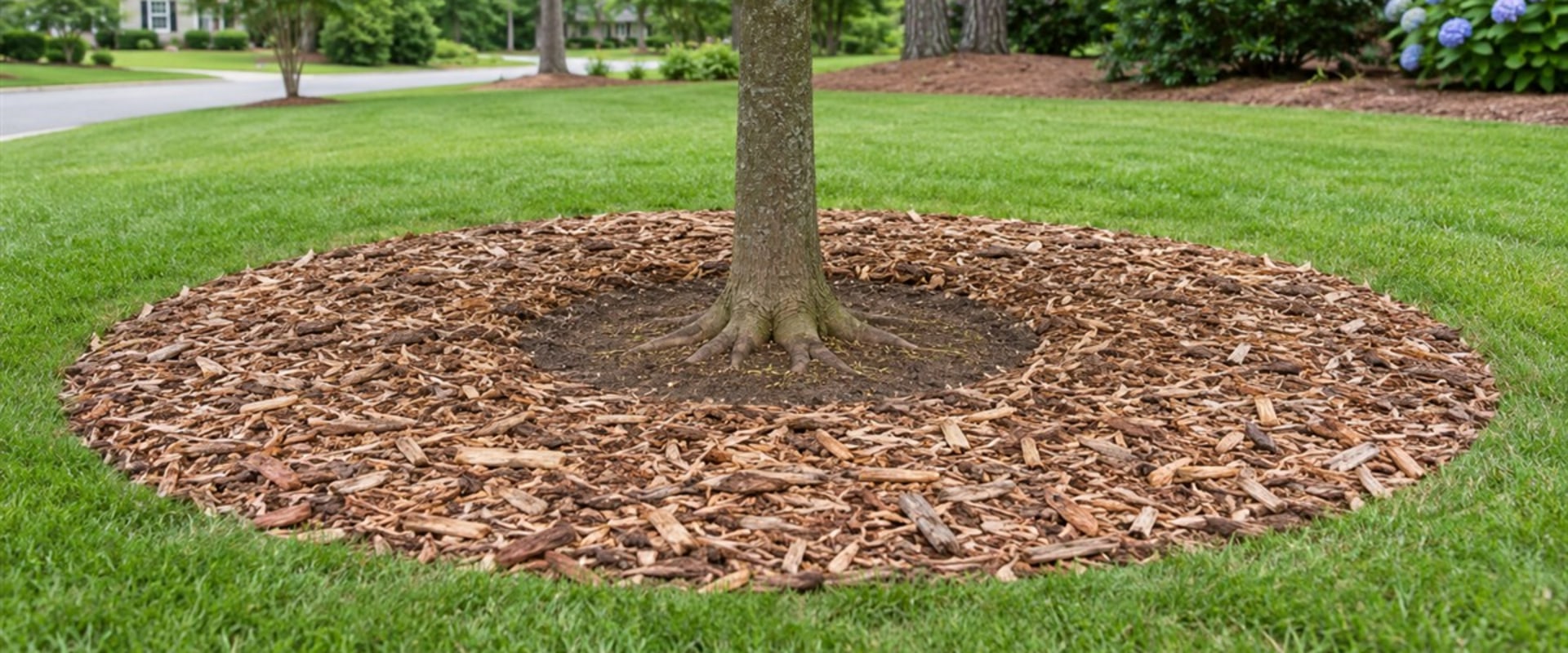
A fresh layer of mulch can make a landscape look finished, but adding another layer every season without checking the old one can create problems. Before ordering mulch, inspect the tree rings already in place and decide where material is actually needed.
Start at the trunk
Look for the natural widening where the trunk meets the roots. Mulch should not be piled against the bark. North Carolina Cooperative Extension's tree-care guidance explains that these mulch piles can hold moisture against the trunk and encourage damaging root growth.
Where loose mulch touches the trunk, carefully move it back without scraping the bark. If the trunk appears to disappear straight into soil, or you find large roots wrapping around it, ask a qualified arborist to assess the situation. Do not cut roots or excavate deeply simply to imitate a photograph.
Measure before adding
Check several locations around the ring rather than judging its depth at the edge. Record how much loose mulch is already present and where it has broken down. Extension's tree-care page recommends a three-inch layer of hardwood chips; site conditions and the material still need consideration.
A practical maintenance note might distinguish three areas: places that need no addition, thin spots needing a modest refresh, and piled areas that need correction. That is more useful than specifying the same number of bags for every tree.
Coordinate mulch with watering
Mulch changes the surface you see, so do not judge the root zone's moisture only by whether the chips look dry. Review your watering and irrigation routine alongside the mulching plan. Record where irrigation reaches and ask your landscape professional how to check the soil beneath the mulch without damaging roots.
NC State's woody ornamentals handbook also emphasizes keeping mulch away from trunks and using it over the surrounding planting area. The goal is useful soil coverage, not a decorative mound at the tree's base.
Leave a repeatable maintenance record
- Photograph the trunk base and the finished ring.
- Note the mulch type and the areas refreshed.
- Record any concerns referred to an arborist.
- Ask future maintenance crews to check existing depth before adding more.
This simple record makes the next visit easier. It also gives you a clear way to request corrections if a later delivery leaves mulch piled against the bark.